
Holocaust survivors · Other 20th-century conflict veterans
Meir Usherovitz
Born 1926
From Auschwitz to the Defense of Israel
Concentration camp survivor · Auschwitz · Mauthausen · Ebensee · Israeli War of Independence · Prisoner of War
 Poland
 Israel
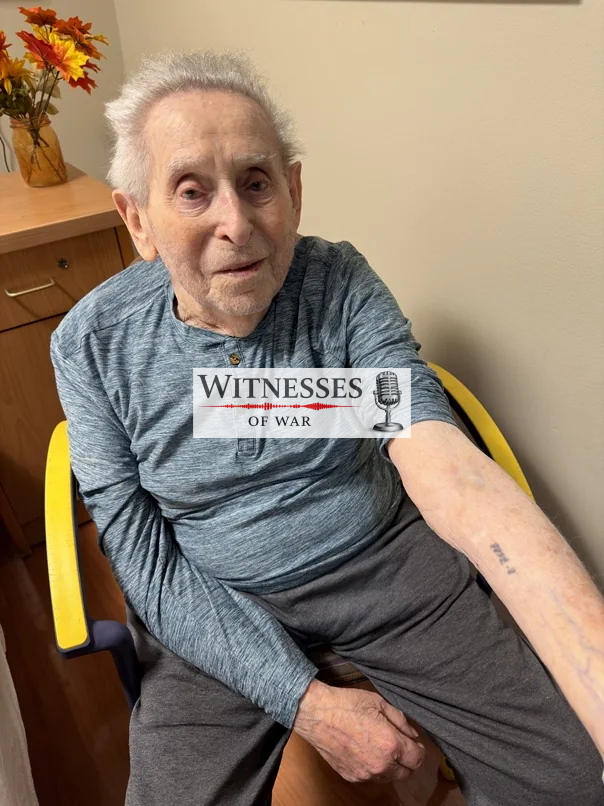
Meir Usherovitz was born in 1926 in Pabianice, Poland, into a Jewish family. His childhood ended with the German invasion in September 1939. Under Nazi occupation, his family was confined in the Pabianice ghetto and subsequently transferred to the Łódź ghetto, where hunger and overcrowding dominated daily life. Meir worked sewing buttons onto German military uniforms.
In 1944, he was deported to Auschwitz-Birkenau, where he was separated from his mother and younger brother, never to see them again. Assigned to work in the SS horse stables, he sometimes obtained bread from local people and secretly carried it back into the camp. His older brother, Naftali, died while performing forced labor among the ruins of the Warsaw ghetto. Meir was the only member of his immediate family to survive the Holocaust.
As Soviet forces approached Auschwitz, Meir endured an evacuation death march. He was subsequently imprisoned at Mauthausen and its Ebensee subcamp in Austria, where he performed further forced labor. He survived until liberation in 1945, then traveled through Italy before reaching British Mandatory Palestine.
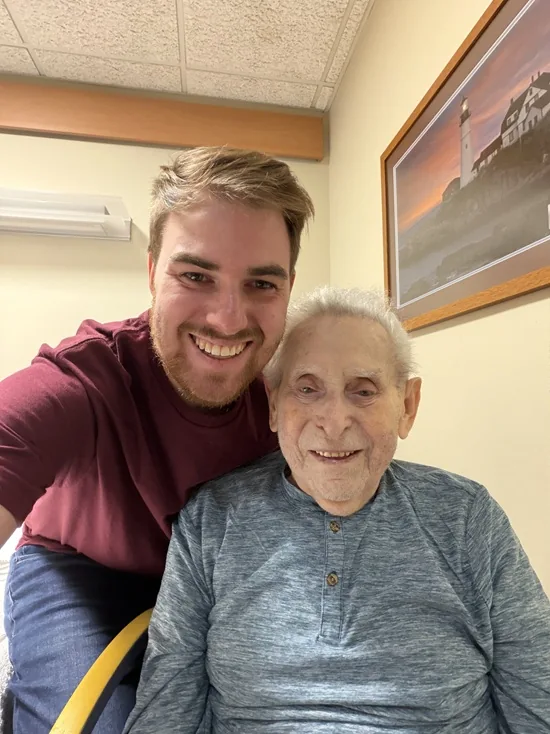
There, Meir settled in Gush Etzion and fought during Israel’s War of Independence in 1948. Captured by Jordanian forces, he spent approximately nine months as a prisoner of war before returning to Israel. After surviving Nazi persecution, he had again experienced captivity while helping defend his new home.
Meir and his wife, Doris, moved to the United States in 1957, raising two daughters in New York. For decades, he found his wartime experiences too painful to discuss. A granddaughter’s school project eventually encouraged him to speak, beginning his work sharing testimony with younger generations and preserving the memory of his murdered family.
← Back to all stories